Complete Career & Hiring Guide
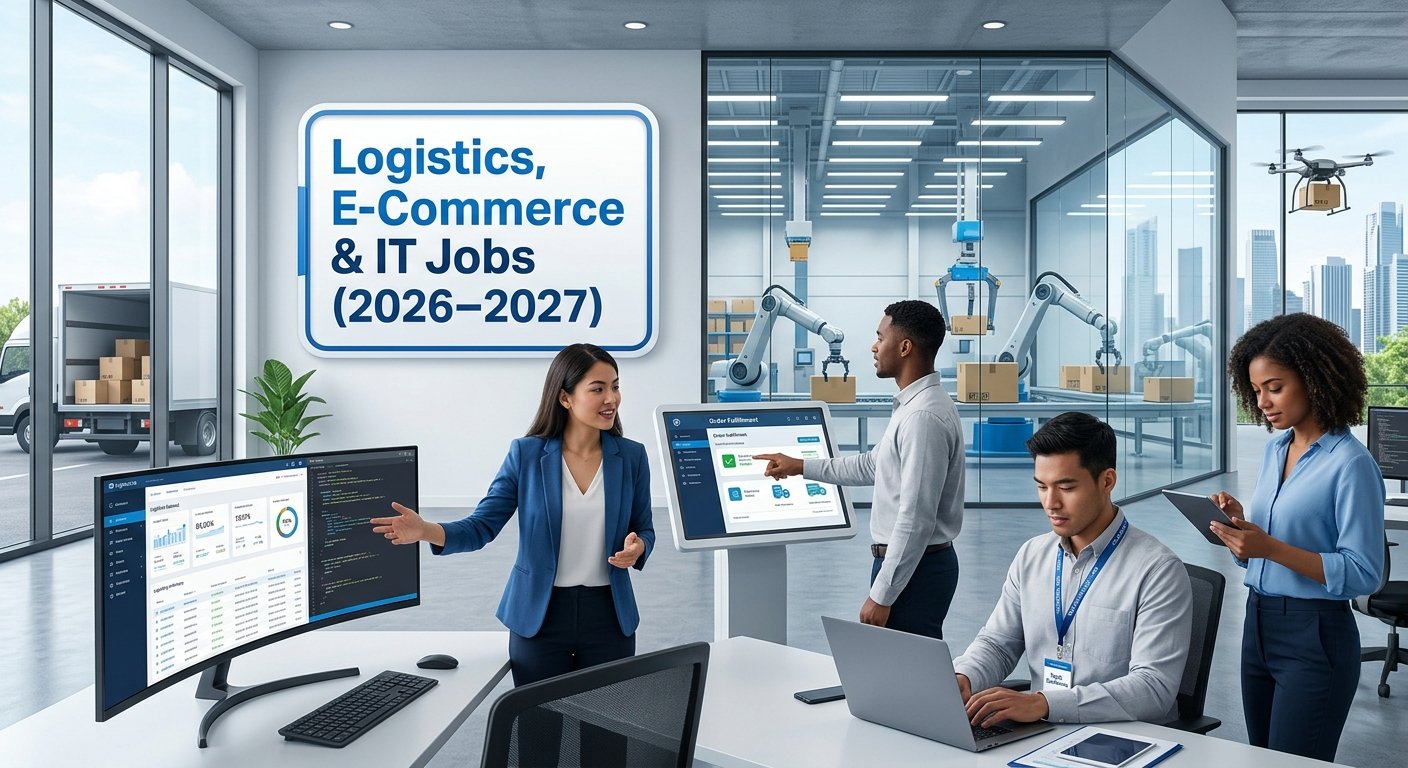
The intersection of Logistics, E-Commerce, and Information Technology is driving one of the fastest-growing job sectors globally for 2026 and 2027. As online retail scales, supply chains rely heavily on Agentic AI, cloud-integrated Warehouse Management Systems (WMS), automated fulfillment centers, and real-time predictive tracking to keep up with consumer demand.
Whether you are a software developer, supply chain specialist, data analyst, or warehouse operations manager, understanding the core trends and top roles in this triple-industry convergence will position you for a lucrative career.
Key Industry Drivers Shaping 2026–2027 Hiring
- AI-Driven Smart Fulfillment: Warehouses are shifting from basic automation to full artificial intelligence. AI agents manage inventory forecasting, dynamic route optimization, and autonomous mobile robot (AMR) fleets.
- Omnichannel & Hyperlocal Delivery: Consumers expect faster, flexible fulfillment options—such as Buy Online, Pick Up In Store (BOPIS) and micro-fulfillment centers within urban areas.
- Cloud Architecture & Cybersecurity: End-to-end supply chain visibility relies on secure cloud systems (AWS, Azure, SAP IBP) that integrate e-commerce storefronts with physical distribution operations in real time.
- Resilience & Localized Supply Chains: To mitigate global trade friction and tariffs, companies are relying heavily on technology to manage diversified, multi-carrier networks and localized warehousing.
Top High-Demand Roles for 2026–2027
Here are the key positions experiencing massive growth, along with their primary responsibilities and expected salary ranges:
1. E-Commerce Solutions Architect / IT Manager
Oversees the technical infrastructure linking online storefronts (Shopify Plus, Adobe Commerce) to backend enterprise resource planning (ERP) and WMS tools.
- Core Skills: Cloud Architecture, API Integration, ERP Systems (SAP, NetSuite), Microservices.
- Average Salary Range: $110,000 – $165,000 per year.
2. Predictive Logistics Operations Manager
Leverages predictive AI analytics to anticipate shipping bottlenecks, optimize fleet routes, and balance inventory levels across fulfillment centers in real time.
- Core Skills: Data Analytics (Python, SQL, Power BI), AI/ML integration, Supply Chain Planning Software.
- Average Salary Range: $95,000 – $145,000 per year.
3. Warehouse Automation & Robotics Specialist
Designs, deploys, and maintains autonomous sorting systems, voice-picking systems, and robotic fleets operating inside modern fulfillment hubs.
- Core Skills: PLC Programming, WMS Integration, Mechanical Engineering, Systems Orchestration.
- Average Salary Range: $85,000 – $135,000 per year.
4. Supply Chain Data Analyst
Turns massive streams of logistics data into actionable operational cost-cutting strategies, inventory accuracy, and customer experience improvements.
- Core Skills: Data Visualization (Tableau, Power BI), SQL, Python, Advanced Excel, Predictive Modeling.
- Average Salary Range: $75,000 – $120,000 per year.
5. Last-Mile & Fleet Optimization Specialist
Focuses on the most complex leg of fulfillment—ensuring quick, cost-effective, and sustainable last-mile delivery using crowdsourced networks, route algorithms, and EV fleets.
- Core Skills: Geospatial Mapping, Route Optimization Algorithms, Fleet Management Software, Cost Modeling.
- Average Salary Range: $70,000 – $115,000 per year.
Key Technical & Strategic Skills Required
To land high-paying roles in logistics and e-commerce IT over the 2026–2027 cycle, job seekers should build proficiency in:
- Enterprise Software: SAP IBP, Oracle Cloud SCM, Blue Yonder, Kinaxis.
- Data & Analytics: SQL, Python/R, Power BI, Tableau.
- Industry Certifications: APICS CSCP/CPIM, Lean Six Sigma, AWS/Azure Certified Solutions Architect.
- Operational Adaptability: Cross-functional communication, change management, and rapid troubleshooting.
How to Prepare and Apply
- Tailor Your Resume: Emphasize quantified achievements—such as metric improvements in order fulfillment speeds, error reductions, or IT integration projects.
- Gain Platform Certifications: Holding official certifications in major cloud platforms, ERPs, or supply chain methodologies provides a distinct hiring advantage.
- Explore Current Openings: Review featured roles and opportunities below.