Article Overview
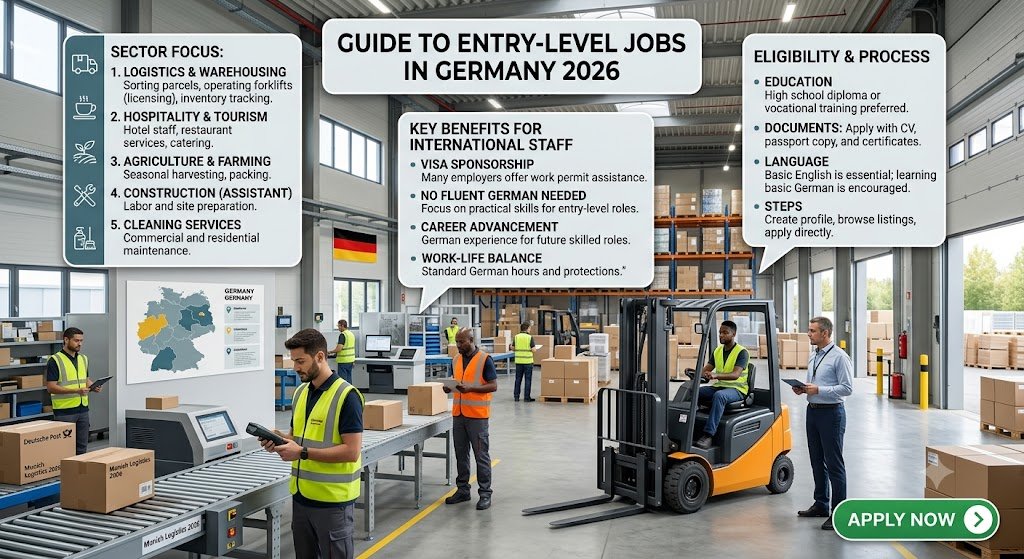
Germany stands out as one of the most attractive European destinations for international job seekers looking for entry-level and unskilled employment. Backed by a powerful economy and a wide array of thriving industries, the country consistently provides excellent avenues for global workers to start a new career path or build a fresh life abroad. This guide breaks down the German entry-level job market, popular sectors, and essential steps for international applicants.
Key Details & Employment Overview
If you are planning to apply for general labor or entry-level positions, here is a quick summary of what to expect:
- Visa Sponsorship: Available (Many registered employers offer official work permit assistance)
- Job Openings: Multiple vacant positions across various sectors
- Average Pay Rate: Up to $30 per hour (varies by region and industry)
- Education Needed: High School Diploma, Vocational Training, or Bachelor’s Degree
- Job Location: Across various cities in Germany
- Hiring Status: Open for international applicants
Understanding the German Employment Market
The German labor market is defined by its steady growth and a continuous demand for workforce support. While automation and digital technologies are advancing rapidly, a large number of physical and operational roles still require human precision. Sectors like agriculture, construction, and corporate hospitality face ongoing labor shortages, creating an excellent opportunity for foreigners ready to relocate and fill these vital gaps.
Immigration and Legal Framework
Before moving to Europe, international workers must understand the official legal entry requirements. For non-EU/EEA nationals, securing a valid employment contract is usually the first step to obtaining a residence permit and work visa. Fortunately, Germany maintains clear legal channels to streamline the entry of global workers, ensuring that both businesses and employees navigate a safe and legal hiring process.
Top Industries Recruiting Entry-Level Staff
- Hospitality and Tourism: Hotels, restaurants, and catering services across Germany frequently hire global workers for customer-facing and back-house support roles.
- Agriculture and Seasonal Farming: The agricultural sector relies heavily on seasonal employees for harvesting, packing, and farm management during peak seasons.
- Construction and Infrastructure: Continuous urban development initiatives and public building projects ensure a steady demand for general construction laborers.
Wage Standards and Living Expenses
Entry-level positions in Germany offer stable earnings alongside excellent labor protections. While hourly wages are highly competitive, it is vital to balance your income expectations against the local cost of living. Expenses such as housing, utilities, and grocery bills can be higher in major metropolitan areas like Munich or Berlin, but the country compensates with an exceptional quality of life, public safety, and strong social benefits.
Language Capabilities and Social Adaptation
While technical or specialized fluency is not always required for general labor roles, having a basic grasp of the German language is a massive advantage. Communication skills are highly valued for workplace safety and team collaboration. Investing time in language learning programs not only opens up more job opportunities but also helps you smoothly adapt to German social customs and daily lifestyle.
Successful Job Search Approaches for Internationals
To maximize your chances of landing an entry-level job from abroad, consider utilizing these practical strategies:
- Digital Job Portals: Regularly search specialized job boards and international employment platforms to submit your resume directly to German businesses.
- Professional Networking: Build connections through online networks and professional referrals, as many positions are filled through direct recommendations.
- Career Fairs: Attend international recruitment events and digital job expos to connect with corporate recruiters who are actively hiring overseas talent.
Frequently Asked Questions (FAQs)
Do I need to speak fluent German to work in Germany?
Not all entry-level positions require complete fluency, but possessing basic conversational German is highly preferred for safety and teamwork. Taking basic language courses will significantly improve your employment prospects.
What are the official visa procedures for non-EU citizens?
Non-EU citizens generally need an official job offer letter or employment contract from a registered German company before applying for a work visa and residence permit at their local embassy.
Are there growth opportunities in entry-level jobs?
Yes. Starting in an entry-level position allows you to gain valuable European work experience. Many German employers offer internal training, skill development, and certifications that can help you move into higher-paying, skilled roles over time.
What is the typical weekly work schedule in Germany?
Standard full-time employment usually ranges between 35 to 40 hours per week. Any additional hours or overtime work are regulated by strict labor laws and typically come with extra compensation.
How can I prepare for life in Germany?
Researching local traditions, basic workplace etiquette, and cultural norms before your move will make integration much easier. Joining local expat groups and engaging with community events will also help you feel at home.
How to Apply
If you are ready to explore entry-level career openings and secure a sponsored employment path in Germany, click the official link below to set up your profile, browse current job listings, and submit your resume.